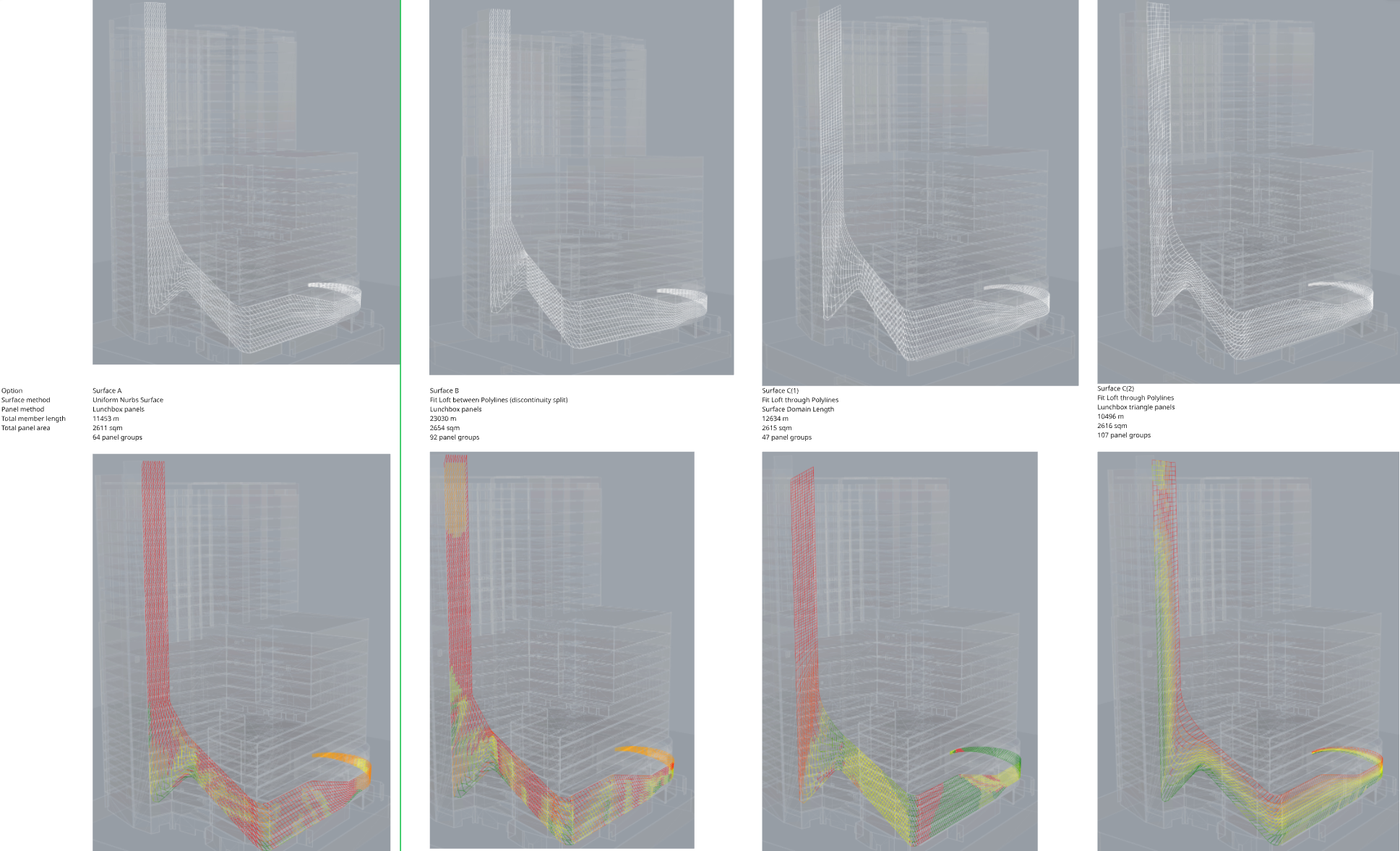
Approach
We treated interoperability as a façade authoring problem, not a one-time export.
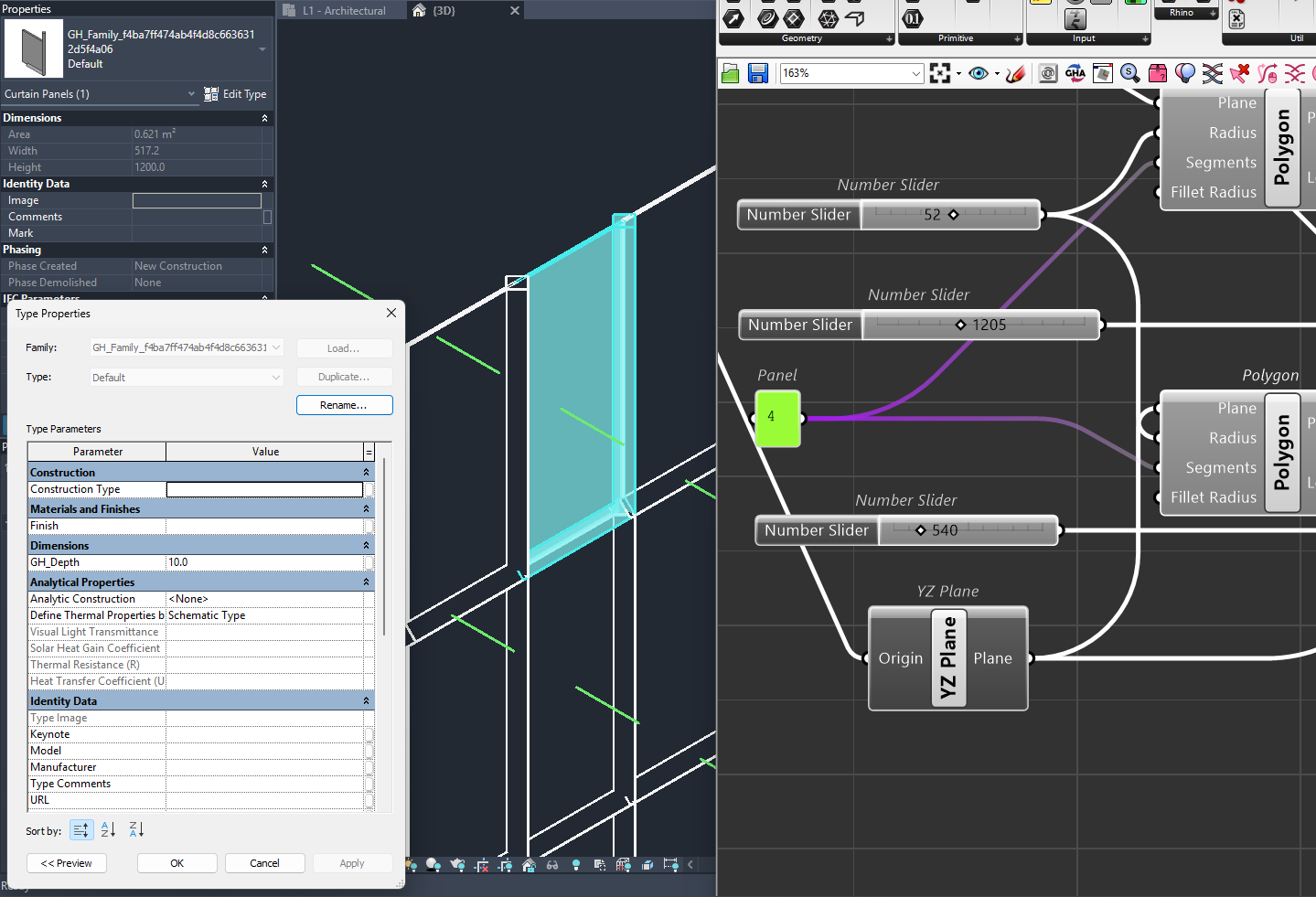
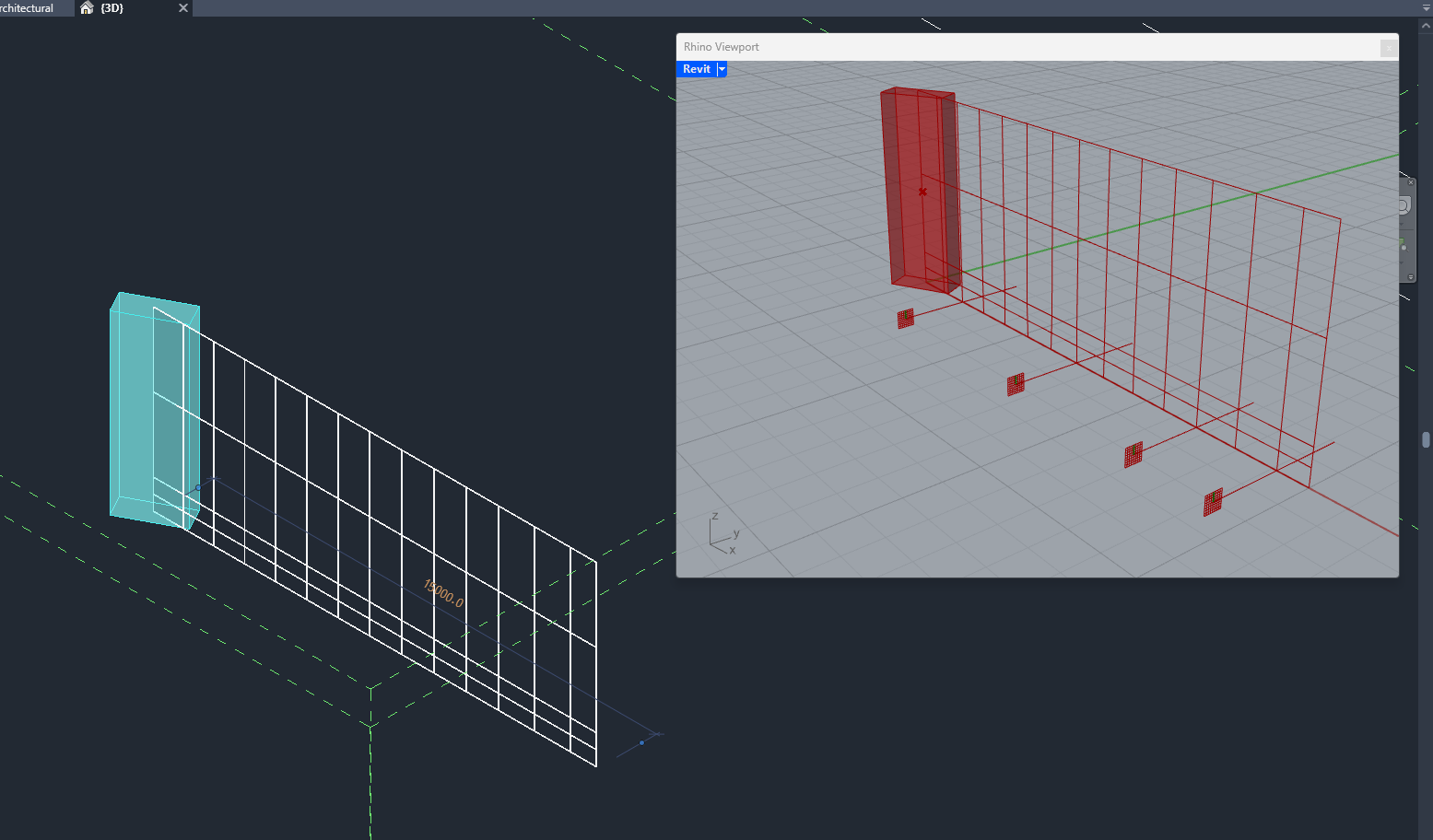
Define procedural Revit families that encode adaptive logic, materials, identity, tags, and dimensions suited to fabrication and documentation. Author the façade parametrically in Grasshopper via a custom Rhino.Inside.Revit integration that instantiates and places family types in the active model. Validate on complex projects where both design intent (from Rhino) and Revit fidelity (schedules, details, drawing sets) were non-negotiable.
Compared with baseline Rhino.Inside.Revit workflows centered on generic geometry, this path targets curtain-wall–class systems at the depth expected of hand-built Revit façades.
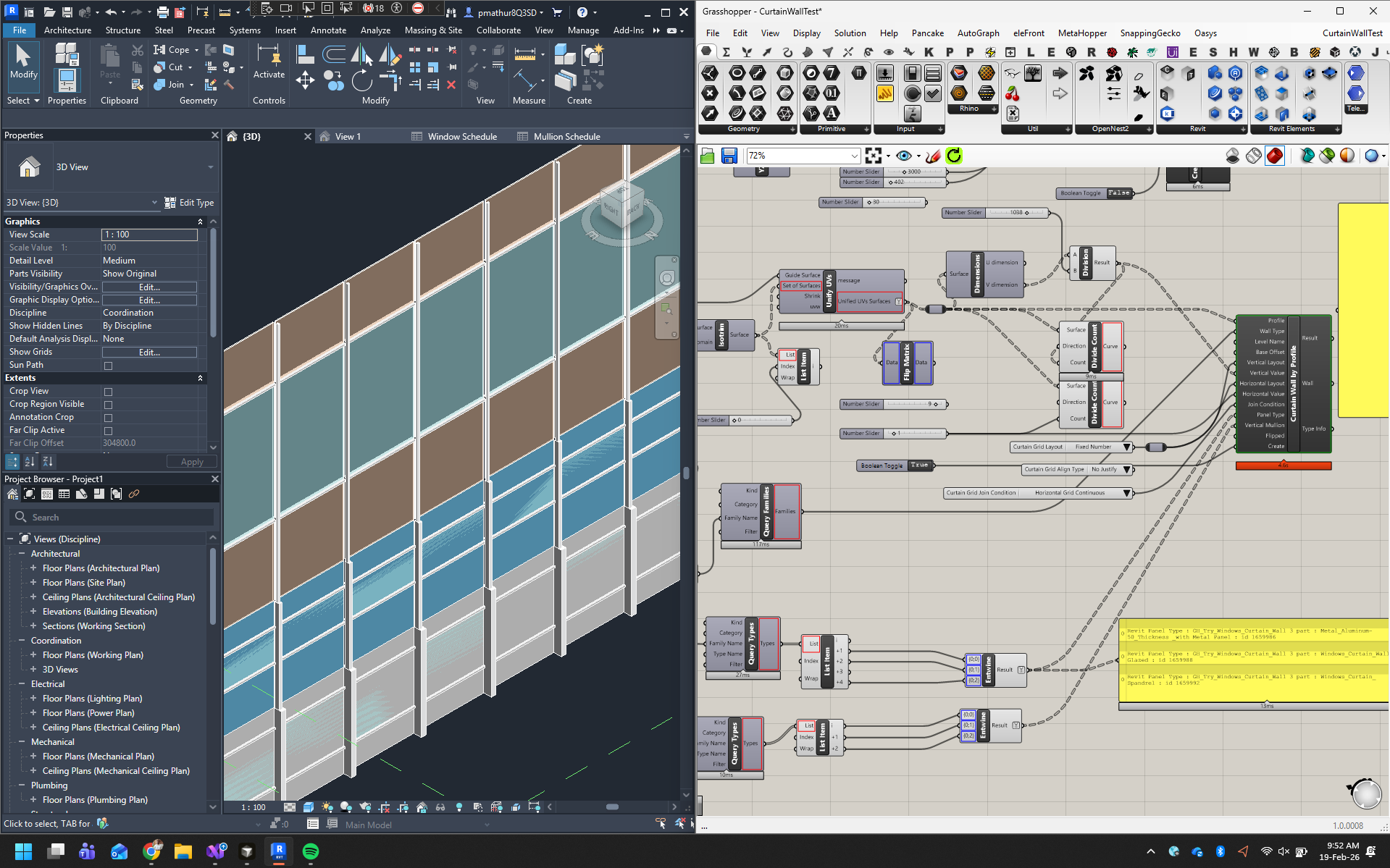
Solution
Procedural Revit families - Families built with adaptive parameters, assigned materials, and embedded metadata (identity, tagging, dimensional characteristics). They are the reusable units of a façade system, not static imports.
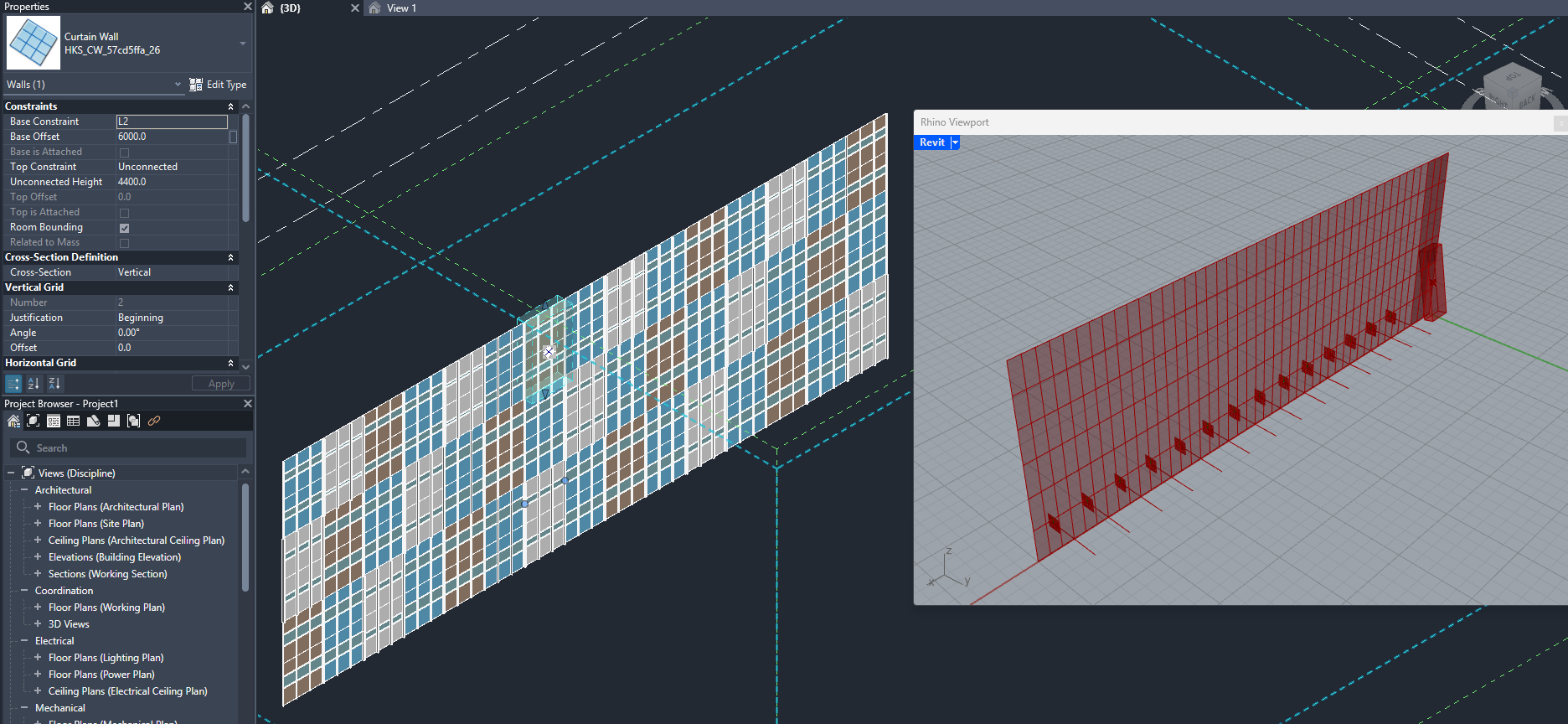
Grasshopper-driven façade automation - A custom Rhino.Inside.Revit layer lets designers drive layout, type selection, and placement from Grasshopper while writing real Revit instances into the project - keeping the façade parametric end-to-end through early design iterations.
Documentation-grade outcomes - The target model supports reliable quantities, schedules, tags, and drawing extraction - the same class of deliverables teams expect from natively authored curtain-wall work in Revit.
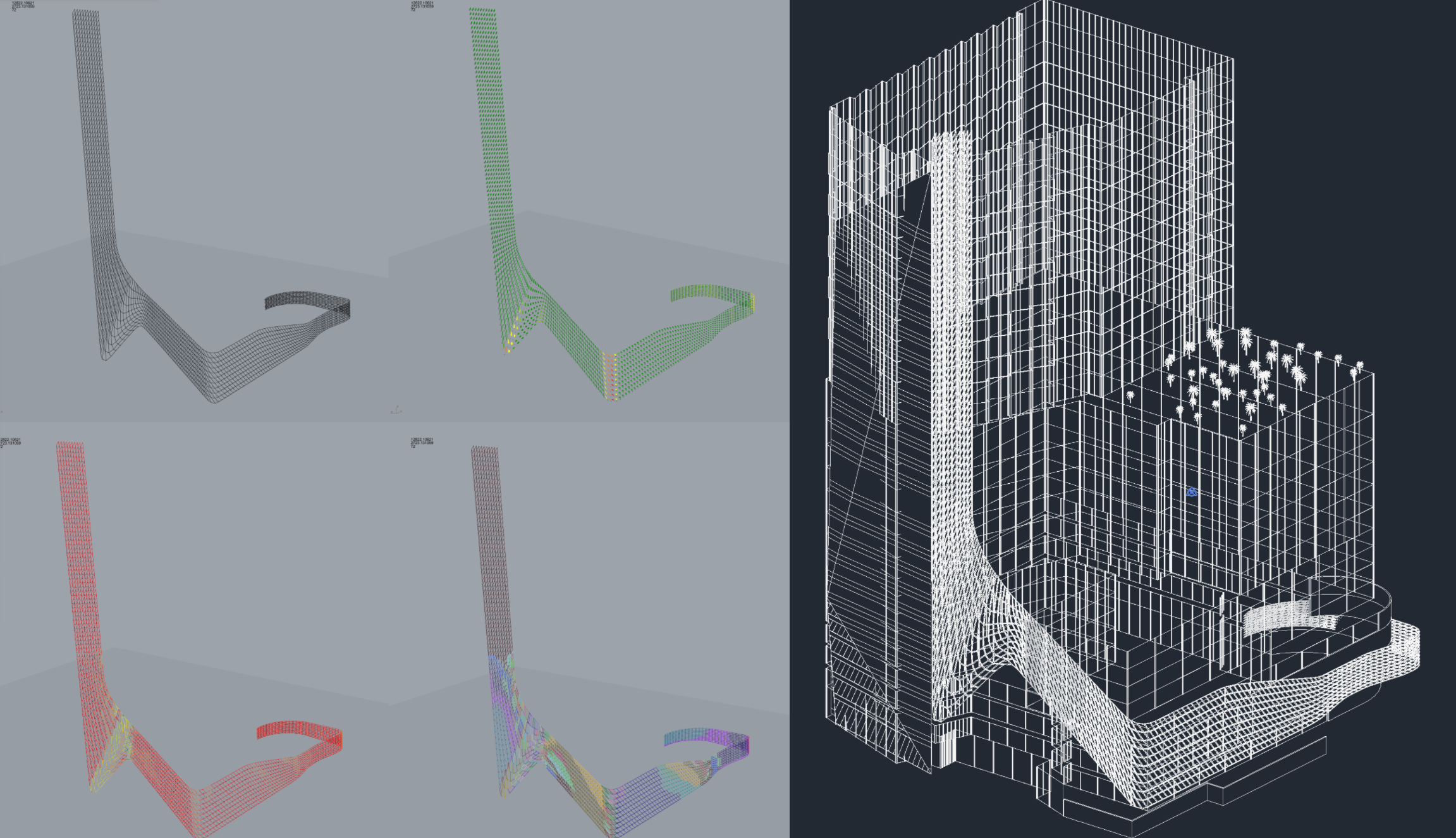
Production validation - The method was refined through R&D and repeated application across three distinct, complex projects, each requiring faithful transfer of geometry and data from Rhino into Revit-backed delivery.